This website is being retired.
Content is no longer being updated from 31 March 2026. Find out more.
Data Saves Lives, the draft data strategy for health and social care, was published by the Department for Health and Social Care on 22 June 2021.
On behalf of the Department, NHSX (now part of the NHS England Transformation Directorate) undertook an online public survey to allow the public and broader stakeholders across health and social care to provide feedback.
Through a mix of closed-form and open-ended questions, feedback was asked on:
The survey was supported by other types of feedback, including:
Analysis of the survey helped inform the final version of the data strategy, and how we will engage with the public and stakeholders going forward.
We received 567 responses to the survey. Not all questions were answered by every respondent as some were optional.
Of 399 respondents to all 7 statements, 271 (68%) agreed or partly agreed with all of them.
The statements with most agreement (both ‘agree’ and ‘partly’ agree) were:
The statements with the lowest agreement (both ‘agree’ and ‘partly’ agree) were:
Of 398 respondents to all 3 priorities, 287 (72%) considered all of them at least “very important”.
The statements had the following levels of importance rating (very or extremely), in order of the most importance.
To note, we have updated the final strategy which no longer contains these specific priorities, these were in draft only.
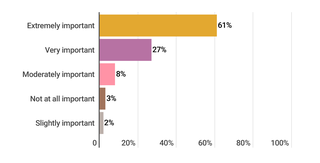
To build the right foundations - technical, legal, regulatory - to make that possible
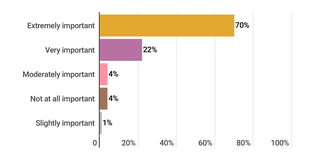
To build understanding on how data is used and the potential for data-driven innovation, improving transparency so the public has control over how we are using their data
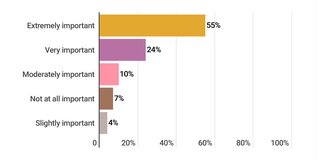
To build understanding on how data is used and the potential for data-driven innovation, improving transparency so the public has control over how we are using their data
Of 375 respondents to all seven chapters, 203 (54%) agreed or strongly agreed with all of them.
The chapters that drew wider agreement on commitments were:
The chapters with lower agreement were:
175 of 567 (31%) identified at least one area where they disagreed with some commitments, from the multiple selection options.
The biggest issues were:
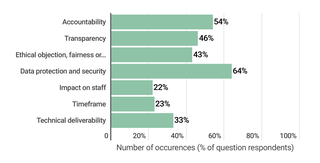
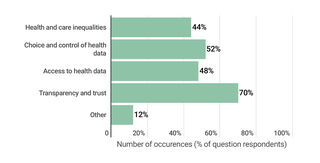
373 of 567 (65%) finished survey respondents picked at least one issue that they would like to be updated about, from the multiple selection options (or ‘other’).
The most popular issues were:
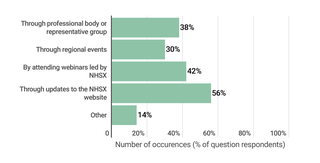
348 of 567 (61%) finished survey respondents chose at least one way in which they’d like to be kept updated, from the multiple selection options (or ‘other’).
The most popular were: